One machine that makes music can look impressive in a short clip. The harder test starts when the robot must repeat the task, respond to change, and work without a person correcting each move.
This matters because music robotics covers very different machines, from robotic instruments to systems that help with recording or live performance. Without clear proof, calling one the biggest advance says little.
- A useful claim names the robot, its task, and the test conditions.
- A good result includes repeatable output, not one successful take.
- The open gap is autonomy: how much work still comes from a human operator?
Start with the task
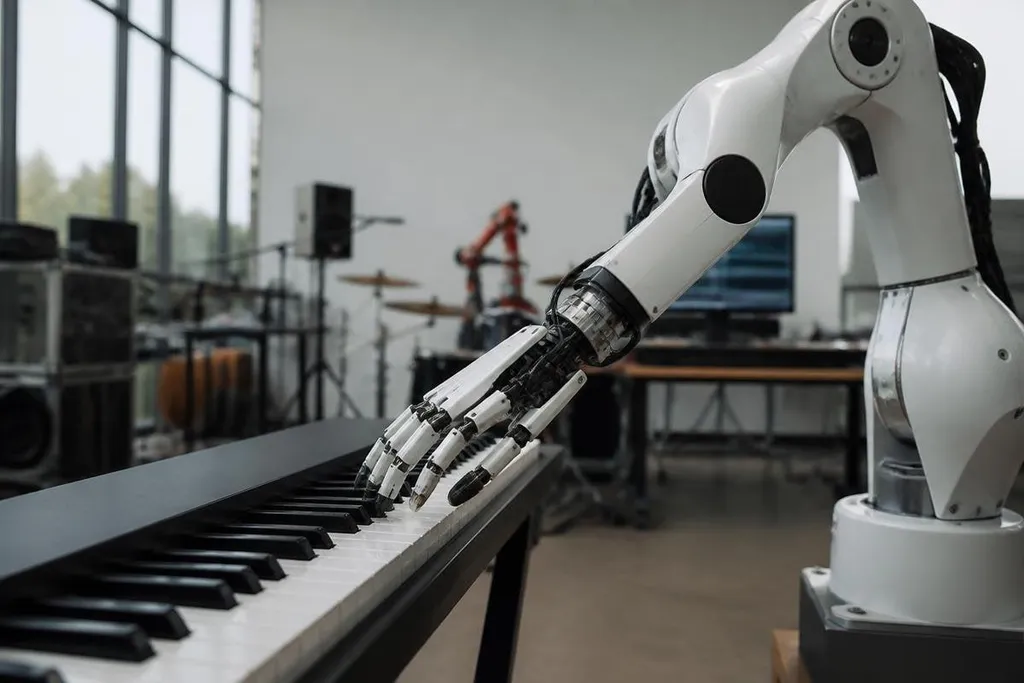
Music robots can make sound in several ways. A mechanical arm might press keys, strike strings, move a bow, or control a physical instrument. Another system might handle a mixer, place microphones, or change settings during a session.
Those jobs need different tests. One machine playing a fixed passage faces a narrow control problem. A robot that follows a live performer must react to timing changes, missed notes, and shifts in volume.
The task also sets the useful measure. For a robotic instrument, reviewers should check timing error, note accuracy, force control, and the number of repeats completed without help. For studio automation, the test may be consistent microphone placement or reliable control of equipment.
A fast arm isn't useful if it hits the instrument too hard. A precise arm has limited value if a technician must guide every movement.
A demo is the start of the proof
Short videos can show that a system worked once. They rarely show how it handles a full session, a changed song, a new instrument, or a small fault.
A serious claim needs the setup beside the result. The report should name the robot, the instrument, the software, the control method, and the task length. It should also say how many attempts worked and how many failed.
That detail lets you compare two systems without guessing. One robot that plays one passage for three minutes may fit a fixed installation. Another that adapts to new music may suit live work, but that claim needs a test with changing inputs.
A music robot’s claim needs the robot, test date, control method, and result named together. Music robotics reporting from Robot24.com can give you that record, leading into the work behind the performance.
Where the hard work sits
The difficult part is often the link between hearing and moving. A system may need to read a score, detect the beat, locate a performer, and adjust force within a short time. Each step can add delay or create an error.
Human musicians also make small changes that a fixed program may miss. They slow a phrase, push one note harder, or react to a room. A music robot needs sensors and control software that can handle those changes without losing the piece.
The source material supplied for this article names no robot, test, price, date, or research result. That leaves the actual ranking unproven. Any list of the biggest advances would need those details before it could be written as fact.
A buying and reading checklist
Use these checks before you treat a music-robotics claim as a major advance:
- Name the system: record the model, maker, and version shown.
- Define the task: write down the instrument, song type, and setting.
- Check human control: note every point where an operator starts, corrects, or stops the action.
- Count the trials: look for repeated runs, failed runs, and the full test length.
- Check the measure: ask whether the result covers timing, force, sound quality, or another clear target.
- Find the limit: record the instrument, room, input, or task the system cannot handle yet.
What should happen next
The next useful report on music robotics should name a system and publish a repeatable test. Until then, the honest answer is that the field has promising claims, but no biggest advance can be selected from the evidence available here.